Is it really worth it?
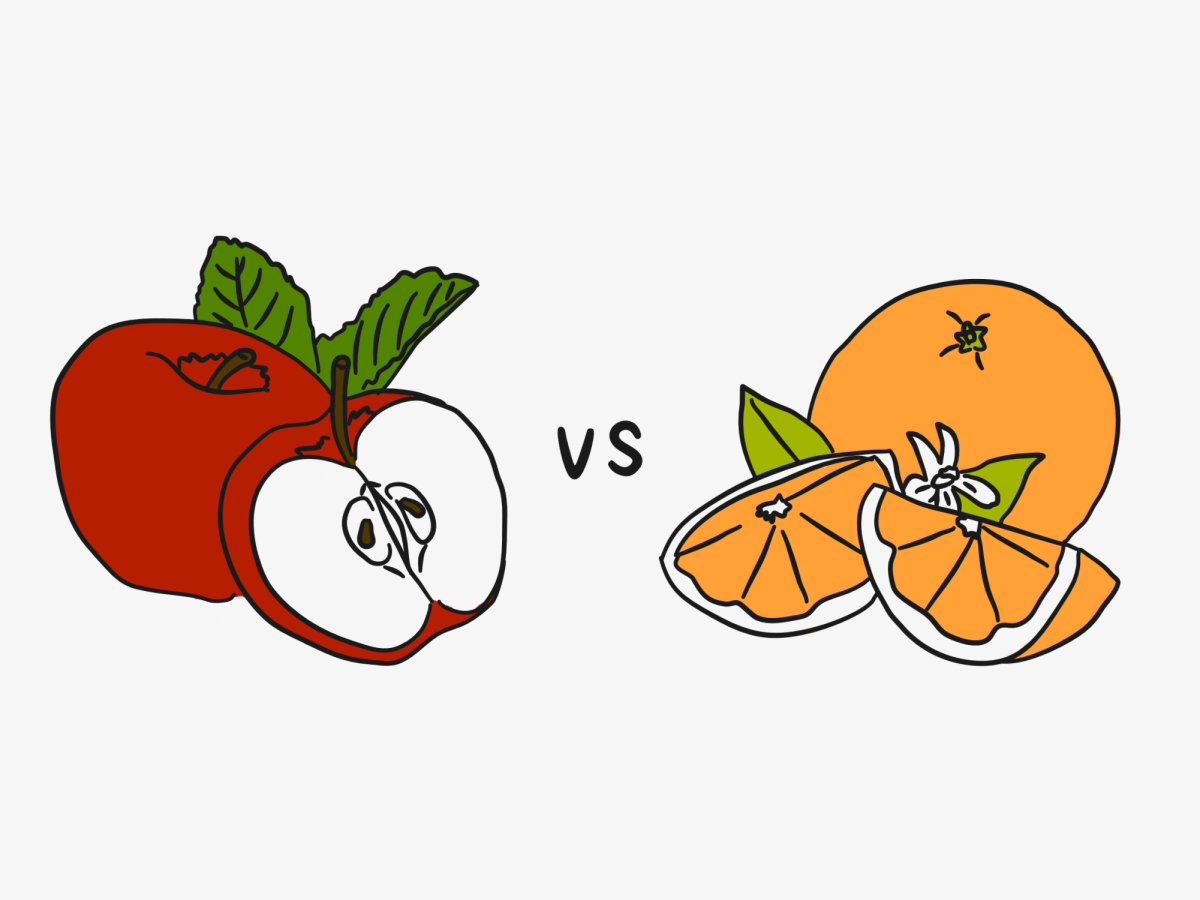
I once knew this girl in 8th grade that would always compare herself to others. She always had to be/feel superior no matter what. The only way she could make herself feel better was by putting others down – even if that meant her own friends. I wondered why she would always do that, especially to her friends. That girl was my best friend. Two years passed by and we are no longer friends; just acquaintances – I think I prefer it that way. She still hinders and compares herself to others, including me. However, the more she compares herself to others, the more she finds herself having hatred towards herself. This is a problem that many teens around the United States face that we as a community need to realize that it should be brought to attention. Self-hatred is a growing problem resulting in people to compare themselves to others and with social media playing a huge factor in this ongoing societal problem.
No matter how hard you try, you’ll somehow end up comparing yourself even the slightest bit without you realizing it. Comparison can start at a very young age to some. Others learn to compare themselves through social media. Betsy Chapman, a professor at Forsake University, says, “Our students live in a very compare-and-contrast social media world. Apps like Instagram, Tik Tok, and Snapchat allow our students to showcase who they are (or who they want to appear to be). Others view their posts and videos and admire them – or judge them – in a million ways: their looks, their fashion, their apparent wealth, their friend group, their vacations, their dance moves, whatever” (Champman). Social media is a cruel world. Everyone is always comparing themselves to people they see online. On social media, people will show you a part of their life that they want the rest of the world to see. For example, your friend could post about always traveling, going places, trying new things, making everything seem easy, etc. But what they don’t show is how hard they worked to get where they are now.
For example, Emily Shea talks about her experience and how she dealt with comparison at a very young age. Emily explains,“When I was in seventh grade I started straightening my hair. Until then, I had always thrown it up in a ponytail or allowed my wavy locks to fall upon my shoulders. It wasn’t until I noticed that all the other girls in my school wore their hair straight that I thought my wavy blond hair was ugly. I remember begging my mother for a straightener because I felt out of place. In my 13-year-old mind I was a Sneetch without a star on my belly. So, I got a straightener and that was that. Well, that is until a new fad came along and I had to have the latest trendy item because, ‘That’s what all the other girls at school are wearing,’ I remember whining to my mom. It wasn’t until I graduated high school that I realized I went through my days of public school constantly comparing myself to my peers, demanding I have the latest trends and trying to fit in” (NDIC Support). This shows that everyone struggles with comparing themselves to others. Comparison isn’t something you can get rid of completely, but it’s something that can be held under control.
There’s always something that you’ll want to change about yourself to try and be like someone else- that’s human nature. However, just because it’s common, doesn’t mean you should let it eat you alive. It will eventually steal your happiness away. According to Betsy Chapman, “The more you try to compare your life with everyone else’s, the more likely it is that you will be robbing yourself of joy.” (Chapman).
How often do you compare yourself to others? How often do you wish you were that person you see on Instagram? Or Tiktok? How much time do you spend scrolling online comparing yourself to another each time you scroll, sad because she/he can do this and you can’t? Or because she/he looks like this and you don’t? I’m not here to attack you whatsoever. Just take a moment to realize: the more you compare yourself, the more you become self-conscious. You want to become this surreal version of yourself. You can’t seem to catch a break – constantly trying to change yourself and be someone you aren’t. If you spend your whole life trying to become this imaginary and pitch perfect version of yourself, you’ll realize at the end how much of your life you wasted trying to become that persona. You’ll come to realize how miserable you are and how you could’ve used your time to find happiness within yourself.
People forget that we are meant to be unique and to stand out. If we all are the same, then life will be boring. It’s a beautiful thing to celebrate joy and each other’s uniqueness. Instead of lamenting about what you don’t have, be blissful for what you do have. Some people have it worse. Now I’m not saying this to guilt trip you, moreover, I’m saying this so you can take time to self reflect whenever you catch yourself comparing yourself to others. I’ve seen how comparison mentally damages others, including my former best friend – don’t go down that same pathway. I guarantee you’d be happier if you would stop letting comparison get to you. You are you and that should be more than enough.
Works Cited
—. “Comparison Is the Thief of Joy.” Parents & Families, 26 Feb. 2018, parents.wfu.edu/2018/02/comparison-thief-joy/.
Chapman, Betsy, Ph D. (’92. “Comparison Is the Thief of Joy.” Parents & Families, 23 Sept. 2022, parents.wfu.edu/2022/09/comparison-is-the-thief-of-joy-3/.
ndic_support. “Comparison Is the Thief of Joy – National Eating Disorders Association.” National Eating Disorders Association, 15 Sept. 2017, www.nationaleatingdisorders.org/comparison-is-the-thief-of-joy/. Accessed 13 Apr. 2026.