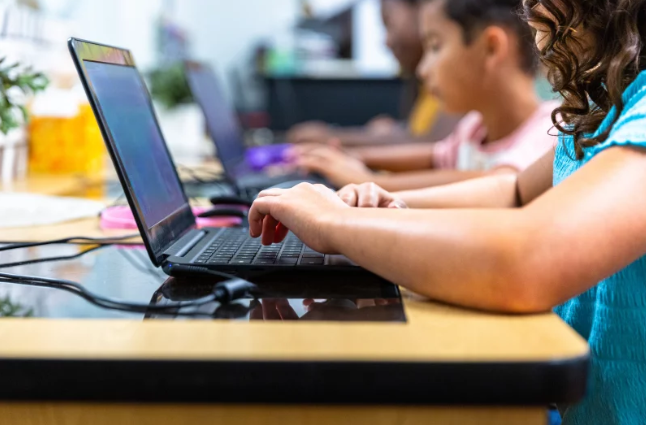
Artificial intelligence is becoming a normal part of school, with many students using it to complete assignments, study, and get help instantly. From writing essays to solving math problems, Al tools are now everywhere in education, AI tools are now everywhere in education. It can feel like a lifesaver when you’re stuck or overwhelmed, especially when deadlines are close. However, this convenience also raises an important question “are students actually learning, or are they just relying on technology to do the work for them?” As AI continues to grow and become more accessible, schools must decide whether it is truly helping students succeed or slowly changing the way they learn in a negative way.
Although artificial intelligence can support student learning by providing personalized help and faster feedback, it can also negatively affect students by reducing independence and critical thinking skills. AI should be used carefully in schools as a tool for learning, not as a replacement for thinking. When it’s used correctly, it can improve understanding, but when overused, it can prevent students from developing the skills they need for the future.
One major benefit of AI is its ability to improve learning by adapting to each student’s needs. Not every student learns the same way or at the same pace, and AI can help with that. For example, AI programs can adjust lessons based on a student’s strengths and weaknesses, allowing them to focus more on areas they struggle with. This can make learning feel more manageable and less frustrating. AI can also provide immediate feedback, which helps students correct mistakes right away instead of waiting for a teacher to grade their work. According to research, students who use AI tutoring systems often show improved test scores because they receive extra practice and detailed explanations (Homes and Bialik). In addition, AI can help students feel more confident by giving them support when they need it most (Chen et al.). These advantages show that AI can be a powerful tool when it is used in a responsible and balanced way.
However, AI also creates serious concerns about how students learn. When students rely too much on AI, they may not develop strong critical thinking or problem solving skills (Chn et al.). Instead of trying to understand the material, they may choose the easier option of letting AI generate answers for them. Over time, this can lead to a lack of independence, where students struggle to complete work without help. Research has shown that students can become dependent on AI tools instead of working through challenges on their own (Holmes and Bialik). This is especially concerning because learning is not just about getting the right answer, it is about understanding how to get there. Some students even submit AI generated assignments without fully understanding the material, which defeats the purpose of education. If students are not actively thinking and engaging with their own work, they are missing out on important learning experiences that help them grow.
On the other hand, some people argue that AI improves education by making learning more engaging and accessible. AI tools can break down difficult concepts into simpler explanations, making it easier for students to understand challenging topics (“AI in Education”). For example, a student who struggles with math might use AI to see step by step solutions, which can help them better understand how to solve similar problems in the future. AI can also make learning feel less stressful by offering quick help when students are confused or stuck. In a fast paced school environment, having instant support can reduce frustration and make students more willing to keep trying. While these benefits are important, they do not sufficiently address the risks of overdependence and the long term effects on students’ learning.
Because of this, the issue is whether AI is good or bad, but how it is used. Many schools are creating new rules to control AI use in assignments (“Schools Struggle”). Teachers are starting to recognize that AI is not going away, so instead of banning it completely, they are trying to find ways to use it responsibly in the classroom. For example, some teachers allow AI for brainstorming and students benefit from AI while still encouraging them to think for themselves. Teaching students how to use AI ethically and responsibly is becoming just as important as teaching traditional academic skills.
At the same time, students also have a responsibility to use AI in a way that supports their learning rather than replace it. It can be tempting to use AI for quick answers, especially when schoolwork feels overwhelming. However, relying on it too much can hurt students in the long run. Skills like critical thinking, problem solving, and independent learning are essential not only in school but also in future careers. If students do not develop these skills now, they may struggle later when they are expected to work without constant assistance. Learning requires effort, patience, and sometimes even failure, and these are things that AI cannot replace.
If students rely too much on AI and stop thinking independently, their ability to learn and grow could be affected in the future. AI should be used as a tool to support learning, not replace it. Schools should continue to guide students in using AI and thinking independently will become even more important. In the end, real learning does not come from getting quick answers, it comes from putting in the effort to truly understand.