Students across the country are turning to AI tools to finish their homework faster, but teachers say the shift is changing the way kids think and learn. Some argue that AI makes schoolwork easier and more accessible. While others worry that students are losing problem solving skills by relying on quick answers.
As AI tools spread through classrooms, many students are using them to write essays, solve math problems, and even brainstorm ideas. Studies show that the shift has grown fast and are raising questions about how much students are actually learning.
As AI gets easier to access, students started using them for almost everything, essays, math homework, study guides, presentations, and quick answers. One study found that 53% of students use AI to write their essay and 48% use it for home tests and quizzes. This shows how fast AI became part of school routines; for teachers, the issue isn’t just the usage of AI but how it’s changing the way students think.
Teachers say one of the biggest problems is that students aren’t thinking the way they used to. When AI gives you the answer instantly, there’s no reason to practice problem solving skills. A study cited in the New York Post said that there’s a strong negative correlation between AI use and critical thinking. The study’s authors warned “The impact extends beyond academic settings into broader cognitive development,” and some teachers say they’re already seeing this play out in class.
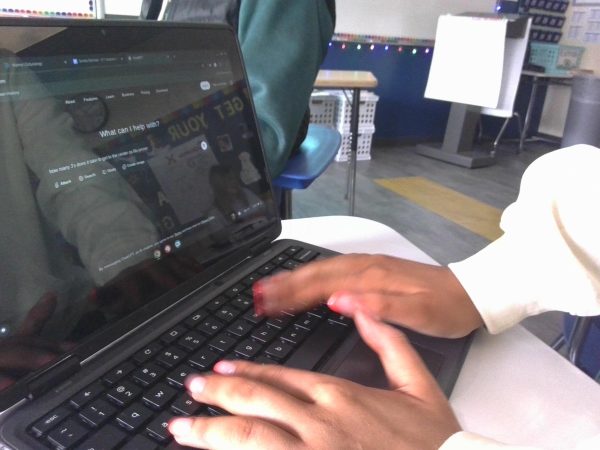
Many teachers say they can tell when an assignment has been written by AI; Even when they can’t prove it, they notice that students struggle when asked to write on their own. It’s becoming a normal battle in the classroom. Murphy Konchick, a high school literature teacher in Nashville, said “Critical thinking and attention spans have been demolished by AI,” adding that he’s caught AI essays “about 40 times.” It isn’t just writing skills but creativity is fading too.
Students who rely heavily on AI often say they have trouble coming up with ideas on their own. Once they see AI’s suggestions, they feel stuck and can’t imagine their own. Research from the University of Carolina found that students sometimes experienced a “fixation of the mind,” meaning after seeing AI’s ideas, they struggled to create their own. As one student in the study put it, they feared over reliance on AI might “undermine their own thoughts.” This loss of confidence affects more than just assignments, it changes students’ whole relationships with learning.
Many students say AI makes it easy to “check out” mentally instead of engaging with material, they let AI do the heavy lifting and drift toward distractions like Tiktok. Psych4schools reported that 25% of students already feel disengaged in their learning. April Giarla, a writer, says that “There’s no critical thinking, analysis, or evaluation involved,” and this disengagement is also changing how students connect with their teachers.
Teachers say they’re noticing a shift, students who use AI heavily often talk less in class, ask fewer questions, and feel less connected. A report from Education Week found that half of students feel less connected to their teachers because of AI use in class. The report also said, “A decrease in peer to peer connections is a concern for teachers and parents,” and with the disconnection comes another issue schools are dealing with such as cheating.
AI has made cheating easier than ever. One quick prompt can produce an assignment that looks polished and original, which creates an unfair divide between students who cheat and students who don’t. A pros and cons report from the University of Illinois stated, “if AI is used to complete assignments or exams, it is unfair to the students who don’t cheat, and it undermines the education process.” The report questioned, “If students learn to cheat in classrooms, what kind of citizen will they make later?” Still, not everyone thinks AI is purely negative, some students see the good in it.
Even with downsides, some students believe that AI can help if used responsibly. For them, AI is more like a tool, something to guide them, not replace them. In an interview I had with a student from East Leyden High, Eloy Monnarez III, he said, “I think it’s great, it can be really helpful for students if they use it the right way,” but even students who try using AI responsibly admit the temptation to depend on it is strong.
Researchers say the biggest issue isn’t what’s happening right now, it’s what could happen years from now if students don’t build strong skills early. Writing, thinking, creativity, confidence, and independence can all weaken if AI becomes a constant crutch. Psychologist Jean Twenge told the New York Post, “When you don’t learn how to write, you don’t learn how to think deeply.” With all of these concerns building up, schools are starting to rethink how to balance AI with real learning, a challenge that’s only getting harder as the technology grows.
For now, schools are still figuring out how to control something that’s already everywhere. Rules are changing, teachers are adapting, and students are learning in a system that looks nothing like it did just a few years ago. As literature teacher Murphy Kenefick put it, “when the thinking is done for you, the learning disappears.”